
If you’re looking at FMCG sales jobs and thinking, “Every role seems to want experience, but how am I supposed to get experience if nobody will give me a chance?” you’re not alone.
It’s one of the most common conversations I have with candidates looking to break into the FMCG industry.
Before we dive in, this article would work well on your company blog, LinkedIn newsletter, recruitment website resource centre, or any careers-focused platform aimed at graduates, career changers, and aspiring FMCG professionals.
The good news is that for entry-level roles, many employers are not necessarily looking for someone with years of FMCG experience. They’re looking for potential.
Over the years, I’ve helped candidates from a variety of backgrounds move into FMCG sales. One of the most successful examples was a candidate who came from a teaching background. She taught Grade 1 and Grade 2 children and had no FMCG sales experience whatsoever.
What she did have was curiosity, tenacity, a willingness to learn, and a genuine interest in brands and marketing.
Before making the leap, she even asked to shadow someone already doing the role. She wanted to understand the reality of the job and decide whether it was the right fit before committing to a career change.
That level of initiative impressed employers.
She wasn’t simply looking for a new job. She was looking for a career with growth potential, higher earning opportunities, and a challenge that would push her outside her comfort zone.
The employer didn’t hire her because she had FMCG experience.
They hired her because she demonstrated the qualities they believed would make her successful.
What FMCG Employers Really Look For
Many candidates assume they are competing against people with perfect FMCG backgrounds.
In reality, hiring managers often ask themselves a different question:
“Can I teach this person the technical side of the job?”
If the answer is yes, they then focus on qualities such as:
- A positive mindset
- Eagerness to learn
- Curiosity
- Resilience
- Commercial awareness
- Passion for sales
- The ability to influence outcomes
- Cultural fit
Product knowledge can be taught.
Systems can be taught.
Processes can be taught.
Mindset is much harder to teach.
The Biggest Mistakes Candidates Make
One mistake I see repeatedly is candidates underselling themselves.
They focus on responsibilities instead of achievements.
Employers want evidence that you’ve made an impact.
For example:
Instead of writing:
“Responsible for managing a classroom.”
Try:
“Introduced a new learning initiative that increased student participation by 25%.”
Results matter.
Data matters.
Achievements matter.
Even if those achievements came from teaching, hospitality, retail, sport, university projects, or volunteer work.
Another mistake is falling in love with the brand rather than the role.
Yes, it’s exciting to work for a well-known brand.
But you need to understand the reality of the position.
FMCG sales can be demanding. It requires resilience, relationship building, problem solving, and a willingness to adapt in a fast-moving environment.
Focus on whether the role aligns with your skills, interests, and long-term career goals.
What to Include on Your CV When You Have No FMCG Experience
If you have little or no FMCG experience, your CV should focus on evidence of performance.
That includes:
- Measurable achievements
- Projects you’ve led or contributed to
- Leadership experience
- Customer-facing roles
- Problem-solving examples
- Academic achievements where relevant
Recruiters and hiring managers want proof that you can take ownership, make things happen, and deliver results.
Job titles are often less important than the impact you’ve had.
How to Stand Out in an FMCG Interview
Preparation can make a huge difference.
Before your interview:
Research the company
Understand their brands, customers, competitors, and recent activity.
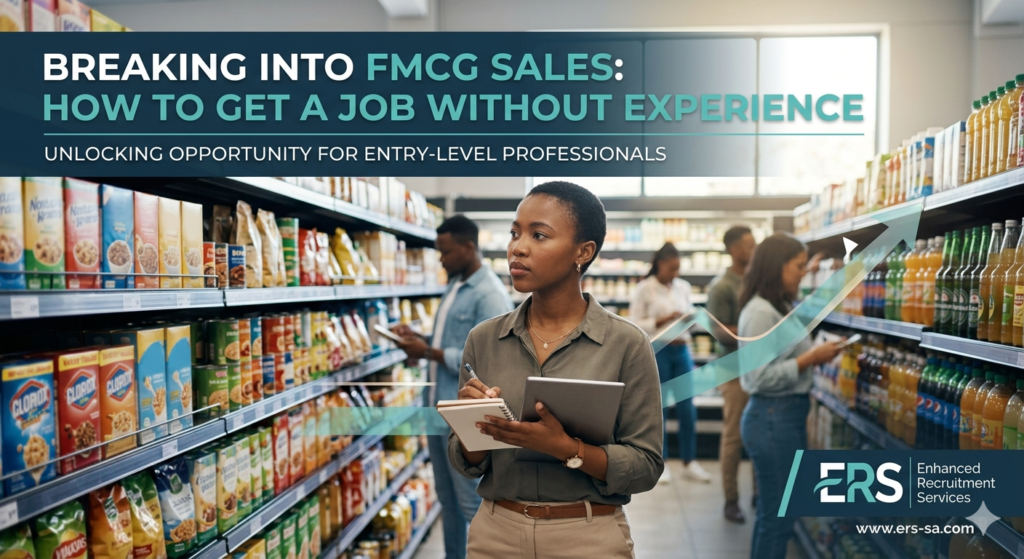
Visit stores
This is one of the most overlooked pieces of advice I can give.
Go into supermarkets and retailers.
Look at product placement.
Observe promotions.
Notice new product launches.
Study how brands compete on shelf.
Ask yourself:
“What would I do differently if I worked for this brand?”
This demonstrates genuine commercial curiosity.
Prepare examples using the STAR method
Structure your answers around:
- Situation
- Task
- Action
- Result
This helps you communicate your experience clearly and effectively.
Ask thoughtful questions
The interview isn’t only about the employer assessing you.
It’s also your opportunity to assess them.
Candidates who ask insightful questions often leave a stronger impression.
Be yourself
Authenticity matters.
Hiring managers aren’t looking for a scripted version of you.
They want to understand who you are and whether you’ll fit the team and culture.
Do You Need FMCG Experience?
My honest answer is: it depends.
If you’re applying for middle management or leadership roles, then FMCG experience is often essential.
At that level, employers expect candidates to understand retailers, customers, commercial strategy, category management, and industry dynamics.
For entry-level positions, however, employers are often far more open to candidates from different backgrounds.
The key is proving that you have transferable skills and the potential to succeed.
A 30-Day Plan to Improve Your Chances
If you want to move into FMCG sales, here are a few practical steps you can take over the next month.
Build your network
Connect with people already working in FMCG through LinkedIn.
Follow industry professionals.
Engage with their content.
Learn from their experiences.
Create your own professional brand
Share your thoughts.
Discuss brands, marketing campaigns, and products you notice.
Show your curiosity and commercial awareness.
Visibility matters.
Become a student of the industry
When you’re shopping, pay attention.
Notice:
- New product launches
- Promotions
- Packaging changes
- Shelf positioning
- Competitor activity
Develop the habit of thinking like an FMCG professional.
Speak to specialist recruiters
A good recruiter can provide market insights, CV advice, interview coaching, and access to opportunities that aren’t always advertised.
The Truth About FMCG
Here’s something many articles won’t tell you.
FMCG is a fantastic industry, but it’s not an easy one.
It’s fast-moving.
It’s competitive.
It’s constantly evolving.
And you need to keep evolving too.
Companies often prefer to hire people who already understand the industry.
That’s simply the reality.
But for those willing to learn, adapt, and deliver results, the opportunities can be incredible.
Because at the end of the day, results speak for themselves.
Final Thoughts
If you’re sitting there thinking:
“I’d love to work in FMCG sales, but I don’t have the experience.”
Don’t write yourself off too quickly.
Focus on what you have achieved.
Demonstrate curiosity.
Show a willingness to learn.
Build your commercial awareness.
And remember that many successful FMCG professionals started somewhere else before making the move.
FMCG can be an incredibly rewarding career.
The skills you learn in the industry, from relationship building and negotiation to commercial thinking and problem solving, can be transferred into almost any other sector.
Your first opportunity may not come overnight.
But if you consistently demonstrate the right mindset, the right attitude, and a track record of achievement, you’ll give yourself a far better chance of getting that first foot in the door.